


A private pilot rolls up to your hangar in his own 172, 110 hours past his last 100-hour inspection, and asks you to give him a lesson. Are you legal? The answer surprises a lot of CFIs. A walkthrough of who actually provides the aircraft under FAR 91.409(b), the student-provided exemption, flying clubs, and the FAA's Lowenstein and Pipitone interpretations.
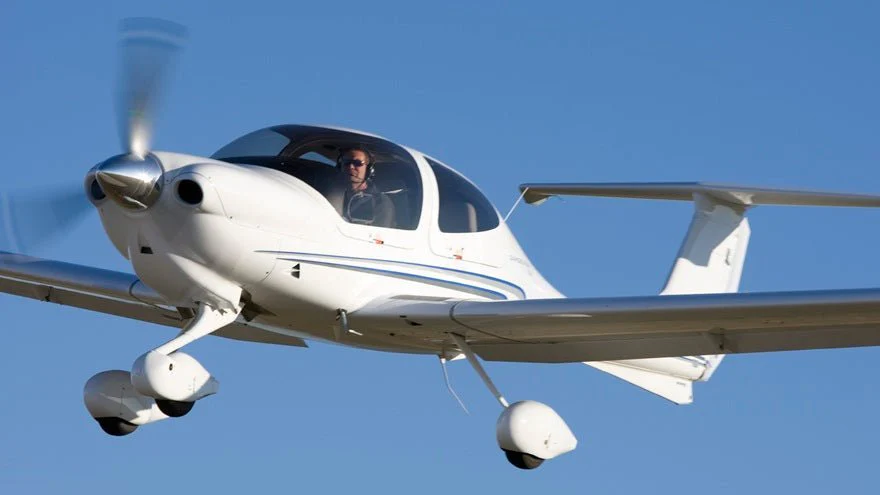
- A student providing their own aircraft (owned or genuinely leased) doesn't trigger the 100-hour - the annual still applies.
- Pipitone (2016) rejected the theory that club membership creates ownership.
- Sham leases don't survive. The FAA looks through paperwork tricks.
- A pure-rental FBO with no CFI relationships doesn't trigger the 100-hour when renters hire outside instructors (Lowenstein, 2016).
- For the foundational mechanics of the rule, see the companion post.
Jump to
A private pilot rolls up to your hangar in his own 172. He's working on his instrument rating and wants to hire you for a lesson. You glance at the maintenance logs and notice the airplane is 110 hours past its last 100-hour inspection.
Are you legal to give him instruction?
The answer surprises a lot of CFIs the first time they encounter it: yes, you are. And the regulation that gets you there is the same one you've been working with all along — 14 CFR 91.409(b) — read with care.
This post is the companion to The 100-Hour Inspection Rule, From the Ground Up, which walks through 91.409(b) and the operational scenarios from the Fly By Knight Letter. If you haven't read that one yet, start there. This post picks up where it left off and digs into the trickier question of who actually provides the aircraft — and why that question matters more than most CFIs get told.
The two-prong rule
Here's the relevant clause of 91.409(b) one more time:
"...no person may give flight instruction for hire in an aircraft which that person provides..."
The 100-hour requirement only kicks in when the same person provides both the instruction and the aircraft. Two prongs. Both have to be present. Split them between different people, and the rule doesn't trigger.
That's the whole game. Once you see it, the doctrine that follows — across forty years of FAA legal interpretations — is the FAA working out the implications.
The cleanest modern statement comes from the Colvin Letter (November 10, 2011), an interpretation issued to the manager of a flight school in Louisiana. The FAA put it about as plainly as it gets:
"The 100-hour inspection requirement applies when the instructor provides both flight instruction for hire and the aircraft used for instruction. This requirement does not apply if the person receiving instruction provides the aircraft."
Both prongs. Same person. That's the trigger.
The framework, in a table
Ownership is usually the right answer — but the legal trigger is provision, not ownership. Most of the time those two questions have the same answer. The cases where they don't are exactly the ones the FAA cares about. The rule becomes a lot more navigable once you frame it as: who's providing what for this flight?
Notice what column 4 turns on. It's not ownership in the abstract — it's who's providing the aircraft for this flight. Ownership is the cleanest way to provide an aircraft, and in most cases the two questions have the same answer. But when they come apart — through leases, club arrangements, or paperwork tricks — the rule follows provision, not the title on file.
The student-provided aircraft exemption
Here's the part that catches a lot of CFIs off guard. When a student shows up with their own airplane and hires you to teach them in it, the 100-hour inspection requirement does not apply. You're providing instruction, but you're not providing the airplane. Both prongs of 91.409(b) aren't present, so the rule doesn't trigger.
This isn't a clever loophole someone found last week. It's been the FAA's settled position for decades. The interpretive chain goes back to at least 1975, with the Slater Letter interpreting the predecessor regulation. Reaffirmed in the Rackers Letter (1984), the Colvin Letter (2011), and the Pipitone Letter (2016). Fifty years of consistent doctrine.
The student can own the airplane outright, or lease it from someone else. Either works. From Colvin:
"The person receiving instruction could provide an aircraft he or she owns or an aircraft he or she leases."
One catch: the annual inspection under 91.409(a) still applies. Every aircraft, regardless of how it's used, needs an annual within the preceding 12 calendar months to be legal to fly at all. The student-provided exemption only removes the 100-hour requirement. The annual is non-negotiable.
The practical rule when a student brings their own airplane:
- ✓ Annual inspection within the preceding 12 calendar months — required
- ✗ 100-hour inspection within the preceding 100 hours — not required
That's a meaningful difference for owner-pilots receiving instruction in their own aircraft. They don't need to schedule 100-hours around their training the way a flight school does.
The anti-circumvention catch
Before anyone gets clever and starts "selling" airplanes to students for the day, or writing one-flight leases — the FAA saw that coming.
Both the Colvin Letter and the Pipitone Letter include guardrails for exactly that kind of arrangement. Colvin:
"If the person receiving instruction does not own the aircraft, the FAA may review the manner by which that person provided the aircraft to ensure the instructor, or an entity represented by the instructor, did not effectively provide the aircraft."
Translation: if a CFI, the CFI's school, or any entity tied to the CFI is the real source of the airplane, and the "lease" to the student is a paperwork shuffle to dodge the 100-hour requirement, the FAA will look right through it. The Reid Letter (2004) goes further — the FAA reads "providing the instructor" very broadly, and the same broad reading applies to providing the aircraft.
This is one of those regulations where substance matters more than form. If you're teaching in an airplane that came from your flight school's tie-down, and the only thing that changed between rental and instruction is a piece of paper calling it a lease to the student — you're still providing the airplane. The 100-hour still applies.
Legitimate cases where a student genuinely provides their own airplane — through ownership, or through a lease with an unrelated third party — are protected. Sham arrangements aren't.
The Pipitone Letter: membership isn't ownership
Before we get to the cleanest fact pattern in this whole doctrine, let's deal with a theory the FAA has explicitly rejected — because it comes up constantly in flying club discussions and it's important to clear off the table before we go further.
The Pipitone Letter (May 4, 2016) responded to a specific concern: the assumption that club membership itself makes you an owner of the club's aircraft. Under that theory, members would be the legal "providers" of all club aircraft regardless of any other facts — turning the entire fleet into "owned" aircraft for purposes of dodging 100-hour inspections.
The FAA shut that down:
"Under 49 C.F.R. § 47.5(b), an aircraft may be registered only by and in the legal name of its owner... If the registered owner is also a club member, this fact alone does not change the legal ownership of the aircraft."
Registration is registration. The owner is whoever's listed on the registration, not whoever holds a membership card. Whatever else is true about flying clubs and the 100-hour rule, the membership-equals-ownership theory is dead.
But Pipitone is narrower than it sometimes gets read. It rejected one specific bad theory. It didn't address the broader question of whether a club as an entity can sit in a position where its members provide the aircraft for instructional flights. To get at that question, we have to look at a different fact pattern.
The pure-rental scenario: Lowenstein
What about an FBO or rental company that has no relationship with any CFI — they just rent aircraft to qualified pilots, and renters who want instruction hire whoever they want? The FAA addressed this exact scenario in the Lowenstein Letter (August 12, 2016), and the answer is clean.
The fact pattern submitted by the FBO (Attitude Aviation, in California):
- The FBO rents aircraft to renters
- The FBO has no contractual relationship with any CFI
- Renters who want instruction hire CFIs directly and pay them directly — the FBO has no involvement in that financial arrangement
- The FBO maintains a list of CFIs who've passed a checkout ride for insurance and proficiency reasons, but renters can hire any CFI they want, on or off the list
Under those facts, the 100-hour inspection requirement does not apply. The renter — not the FBO — is providing the aircraft to the instructional flight. The FBO is providing rental, not instruction.
The FAA put it like this:
"It makes no difference whether the person providing the aircraft is an owner, renter, lessee, or borrower, so long as the person providing flight instruction is not in any way providing the aircraft."
This is a useful result for any business model that separates aircraft access from instruction. But the FAA was specific about the conditions:
- No contractual relationship between the rental company and the CFIs. No employment, no contracts, no revenue sharing.
- No financial involvement in the instruction. Renters pay the CFI directly. The rental company doesn't bill, collect, or take a cut.
- No steering renters toward specific CFIs. A list of pre-approved CFIs is fine for proficiency reasons, but renters can't be required to use anyone from the list.
- The rental company doesn't offer instruction itself.
The Lowenstein Letter also includes an explicit warning against using this structure as a workaround:
"This arrangement should not be used as a 'work-around' the regulation, whereby a company rents the aircraft to a student and then later also provides, or is instrumental in providing, the flight instructor separately."
If your structure looks pure-rental on paper but the same CFIs always end up teaching the same renters through informal channels, the FAA will read through that.
What this means for flying clubs
Now we can fit the pieces together. Pipitone closed one door. Lowenstein opened another. Where do clubs fit?
Lowenstein didn't address flying clubs specifically. But the structural similarity to Attitude Aviation is hard to miss — a non-equity flying club where members pay dues for aircraft access, members independently hire outside CFIs for instruction, and the club has no relationship with those CFIs looks an awful lot like Lowenstein's FBO with a different pricing model. The reasoning appears to extend.
That said, the FAA hasn't published an interpretation extending Lowenstein to clubs explicitly. Anyone running or working with a club in that posture should verify directly with their local FSDO or with FAA Chief Counsel before relying on the parallel.
If you're a CFI being asked to instruct in a club aircraft, or a flight school evaluating partnerships with clubs, the right questions aren't about membership theory. They're about structure:
- Does the club itself offer instruction? If yes, the club is providing both the aircraft and (through its CFIs) the instruction. 100-hour applies.
- Does the club have contractual relationships with CFIs — employment, retainers, revenue sharing? If yes, the club is in the chain of providing the instruction. 100-hour applies.
- Are members required or steered to use specific CFIs? If yes, same problem.
- Or is it pure access for dues — members hire whoever they want, the club has no role in instruction at all? If yes, the structure looks like Lowenstein's FBO. The 100-hour likely doesn't apply, but the FAA hasn't published guidance specifically on clubs in this posture, so verify before relying on it.
In all cases, look at the registration. The membership-equals-ownership theory is dead under Pipitone, regardless of how the rest of the structure is set up.
What this means for flight schools
For schools building dispatch systems and operational policies, the framework above has real implications.
Dispatch can distinguish between rental and instructional operations on the same airplane. As Scenario 6 in the Fly By Knight Letter showed, an airplane that has hit its 100-hour can stay in rental service while waiting for maintenance. The rule attaches to the operation, not the airplane in the abstract. Software that tracks this distinction — instead of treating the airplane as universally grounded at 100 hours — gives you real operational flexibility.
Owner-pilot students are a real customer segment. If you serve owner-pilots receiving instruction in their own aircraft — instrument ratings, type-specific training, recurrent training — you don't have to maintain those aircraft on a 100-hour schedule. The annual is the requirement. That matters for instructors who travel to clients, and for schools offering training in customer-owned aircraft.
Don't try to engineer around the 100-hour with leases. The student-provided exemption applies when the student genuinely provides the aircraft — through ownership or a real arm's-length lease with an unrelated party. If your school is leasing aircraft to its own students for its own CFIs to instruct in, the FAA will read through the paperwork and treat the school as the provider. The anti-circumvention reading is broad, and the FAA has been explicit about not using these structures as workarounds. The exemption exists for legitimate situations where a student really is bringing their own airplane. It's not a maintenance-scheduling tool.
The Lowenstein structure is a real model. If you're operating a pure-rental business — or thinking about spinning one off from a school — Lowenstein is the doctrine that supports keeping the 100-hour requirement off your rental fleet, as long as you're genuinely separated from the instruction side. The four conditions above are the test.
The full citation chain
For anyone who wants to read the source material directly, here's the doctrine in chronological order:
- Slater Letter (Feb. 14, 1975) — earliest interpretation establishing the student-furnished aircraft principle, under the predecessor regulation FAR 91.169(b)
- Rackers Letter (May 3, 1984) — student-furnished aircraft exemption confirmed
- Brown Letter (Feb. 24, 2000) — "depends on how the aircraft is operated"
- Reid Letter (Aug. 20, 2004) — FAA reads "providing the instructor" (and by extension, the aircraft) broadly
- Colvin Letter (Nov. 10, 2011) — modern statement of the two-prong rule
- Greenwood / Fly By Knight Letter (Oct. 9, 2015) — operational scenarios and the 10-hour grace period (covered in detail in the companion post)
- Pipitone Letter (May 4, 2016) — flying club membership doesn't equal ownership
- Lowenstein Letter (Aug. 12, 2016) — pure-rental FBO with independent CFIs doesn't trigger 100-hour
Each letter cites the ones before it. The doctrine has been remarkably stable across fifty years.
All FAA legal interpretations are publicly available at faa.gov in the Office of Chief Counsel's interpretation database.
Bottom line
The 100-hour rule is narrower than its reputation. It applies only when the same person provides both the flight instruction and the aircraft. When the student genuinely provides the airplane — through ownership or a real lease — the 100-hour doesn't trigger, though the annual still does. The FAA will scrutinize arrangements that look like the instructor is the real source of the airplane through paperwork tricks. A pure-rental FBO with no relationship to any CFI sits cleanly outside the 100-hour requirement, under conditions the Lowenstein Letter spelled out. Pipitone closed the door on the theory that club membership creates ownership; whether a Lowenstein-style club arrangement is treated the same way is a question the FAA hasn't published guidance on.
For CFI candidates studying for the checkride: the DPE may well ask you about a student-provided aircraft scenario. Walking through the two-prong rule with confidence — and being able to point to the regulation language — is the difference between a strong oral and a fumble.
Here's the kind of answer that lands well in an oral:
"The 100-hour inspection requirement under 91.409(b) applies when the same person provides both flight instruction for hire and the aircraft used for that instruction. If the student provides the aircraft — through ownership or a genuine lease — the 100-hour requirement doesn't apply, because both prongs of the rule aren't present. The annual inspection under 91.409(a) still applies in all cases. The FAA has consistently held this position across multiple legal interpretations, including the Colvin Letter in 2011 and the Pipitone Letter in 2016."
Confident, accurate, points to the regulation, cites the doctrine. That's the answer.
For working CFIs: the next time someone shows up in their own airplane wanting instruction, the 100-hour isn't the question. The annual is. Confirm the annual, do your normal preflight, teach the lesson.
For flight schools and rental businesses: the operational flexibility is real, but so are the limits. Build with substance, document carefully, and the framework supports a wider range of training arrangements than the bumper-sticker version of the rule suggests.
For the foundational mechanics and a walk through the six Fly By Knight scenarios, head over to The 100-Hour Inspection Rule, From the Ground Up.
Sources
Regulations
- 14 CFR 91.409 — Inspections
- 14 CFR 141.39 — Aircraft (Part 141 schools)
- 49 CFR 47.5 — Aircraft registration
FAA Legal Interpretations (in chronological order)
- Slater Letter (Feb. 14, 1975)
- Rackers Letter (May 3, 1984)
- Brown Letter (Feb. 24, 2000)
- Reid Letter (Aug. 20, 2004)
- Colvin Letter (Nov. 10, 2011)
- Greenwood / Fly By Knight Letter (Oct. 9, 2015)
- Pipitone Letter (May 4, 2016)
- Lowenstein Letter (Aug. 12, 2016)
All FAA legal interpretations are publicly available at faa.gov in the Office of Chief Counsel's interpretation database.
About the author
Nate Ehlers is the owner of Backseat Pilot and an active airline pilot, C-17 instructor pilot in the Air Force Reserve, and CFI/CFII/MEI/ATP. He has 8,500+ flight hours and was the #1 graduate of USAF Undergraduate Pilot Training, earning the AETC Commander's Trophy. Backseat Pilot builds reference materials and training tools for the situations pilots actually run into — created from real cockpit experience, not theory.